Posts

Post-Season Poinsettia Care
Image
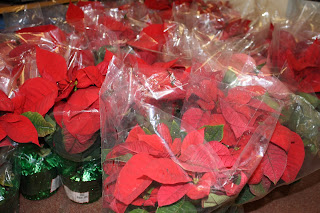
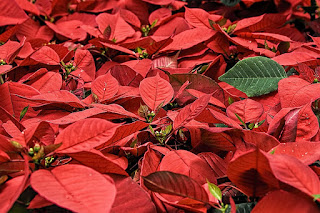
by Kurt M. Jones, Chaffee County Extension Director             The holidays are behind us, but that doesn’t mean that you need to discard your poinsettias!  Poinsettias often lose their color in late winter, usually by mid-March.  When the plant has passed its stage of usefulness in March or April, remove the colorful bracts and part of the stem.  This cutting back can be done any time from March through mid-July, depending on the desirable size and shape of the plant.  Be sure to leave three or four leaves on each stem to insure sufficient photosynthesis.            During the early summer, the plant will need to be repotted into the next larger size pot.  Use a well-drained potting soil, such as a blend of sphagnum peat moss, vermiculite and/or perlite.  Thoroughly mixing a phosphate fertilizer with the soil at the time of repotting is a common practi...
Aphids On My Honeysuckles!

Image
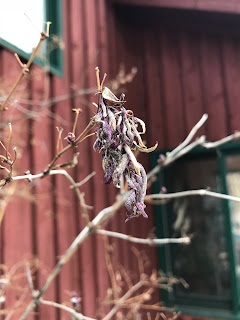
Aphids On My Honeysuckles! by Kristina Hughes, Clear Creek County Master Gardener I’m writing this blog partly as a reminder to myself to attend to a problem I first noticed last growing season but whose best treatment is applied during the winter. Now would be a good time to deal with it. I have several honeysuckle shrubs on my property. They are one of the few types of shrubs I can grow which don’t get savaged by the animals and don’t require extra water. I have been hugely pleased with them. Photo by Kristina Hughes This past summer, I noticed that the honeysuckle leaves looked odd: small, purplish and rolled length-wise, growing in tight little clusters as if the leaves had never fully expanded. From a distance the leaf clusters on the branches looked like they were covered in flecks of black and white dirt. When I looked more closely, I saw tiny white flecks and tiny green bugs, LOTS of them, all over both the outside and inside of the rolled up leaves. I knew they were aphids bec...

CARA PERAWATAN MESIN POTONG RUMPUT

Image
Memiliki halaman rumah yang indah dengan ditumbuhi rumput hijau serta bersih merupakan dambaan bagi sebagian orang. Halaman dengan rumput yang hijau dan bersih sangat indah untuk dipandang serta dapat memberikan nuansa tenang, pikiran pun akan terasa rileks. Akan tetapi kita pun sering terpikirkan bahwa merawat rumput sangatlah merepotkan ketika berkeinginan untuk memiliki halaman dengan rumput yang hijau serta bersih. Anda bisa memakai jasa layanan pemotong rumput, ataupun melakukannya sendiri. Jika halaman rumah anda tidak begitu luas, anda dapat menggunakan gunting pemotong rumput, sedangkan jika halaman rumah anda lumayan luas anda dapat memakai mesin pemotong rumput. Apabila anda tidak memiliki mesin tersebut dan berencana hendak membelinya, baca lebih lanjut artikel ini yang akan memberikan tips memilih mesin potong rumput. Dalam memilih mesin potong rumput Anda harus memperhatikan 3 hal yaitu jenis mesin potong rumput, tipe pisau mesin pemotong rumput dan cara perawatannya. Beri...

Poinsettias by Kurt M. Jones Chaffee County Extension Director

Image
The Aztecs cultivated the poinsettia in Mexico long before Europeans came to the Western Hemisphere.  They used the bracts for a reddish-purple dye and the latex to counteract fever.  The plant also played a part in midwinter celebrations and was widely planted in gardens.             In 1925, Joel R. Poinsett, a botanist and the first U.S. Ambassador to Mexico, sent some plants to his home in South Carolina.  He shared his find with other plant enthusiasts.  December 12 th is National Poinsettia Day and recognizes Poinsett’s contribution to the holiday season.             Poinsettias do well in the home and keep their color until mid-March.  The showy red, pink, white, yellow, bicolored or speckled modified “leaves” are called bracts.  With proper light and temperature, they accumulate the pigments that give them their color.  The flowers of ...

How to contain plant-eating varmints and hail on deck planters by Ed Powers

Image
We have lived in our house in Evergreen for the past 7 years.  And for the past 6&1/2 years we have battled plant-eating varmints and hail on our deck planters.  We started with pots that had wire cages that we built.  Well, the varmints managed to get thru the cage and destroyed our plants.  We then bought hangers and hanging planter bags and put wire cages around them.  Again, both the varmints and hail got the plants.  Half way through this summer we decided to put pots that sat on the deck railing and put plastic sheet plastic on each side of the planters on the railing. It partially worked: we stopped the varmints from getting in. At the same time we set up a night-vision game camera to find out who the culprits were.  No luck, we were only able to get a picture of a tail. Not only could we not discover what the varmints were, but the hail again destroyed our flowers. Out of desperation, we designed and built a modified mini greenhouse type en...

Ideas from the Garden Center by Sandy Hollingsworth

Image
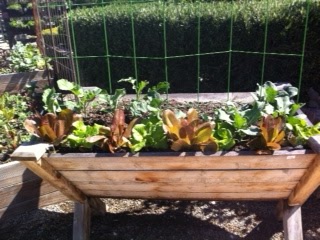
Gardeners are notorious for getting ideas and finding new ways to use space in their garden by visiting garden stores and nurseries. After the fall cold snap when our gardens succumb and we find ourselves sad about the abrupt end to the season, we just can’t stop thinking about gardening.  While you may know that raised beds are a great way to use space and reach your veggies as they grow, you may like to see some ideas to ponder for next season. A rectangle (pictured) is the most common shape for a raised bed and it is generally recommended that it be 3-4 feet wide and about 6-8 feet long so that you can reach if from each end. Shorter is just fine and having two or more is often desired depending on how much produce and variety that you want to grow.  Three tips in the mountains for new raised beds are to line the bottom with hardware cloth to deter critters from digging from below, adding row covers to warm the soil for seeds and keep insects and critters, including birds, ...

Landscaping with Colorado Native Plants Conference --Save the Date!

Image
Landscaping with Colorado Native Plants Conference --Save the Date! February 10, 2018 at the Denver Botanic Gardens Registration for the 3rd Annual LWCNP Conference coming December of 2017: landscapingwithcoloradonativeplants.wordpress.com . Our keynote speaker will be Panayoti Kelaidis.   Topics for the ‘New to natives’ breakout session will include planting for habitat, planting for year-round interest, adding natives to an existing landscape (including replacing your lawn), and “plant this, not that”.  Topics for the ‘Knows the natives’ breakout sessions will include maintenance,  rock/crevice gardening (including bare-root planting), soils for native plants, and water conservation through passive water harvesting.  We will end the day with panel with a grower’s perspective on natives. We will also have many wonderful vendors to check out before and after the conference, and during breaks. The Landscaping with Colorado Native Plants Conference promotes the in...