Posts

Poinsettias by Kurt M. Jones Chaffee County Extension Director
Image
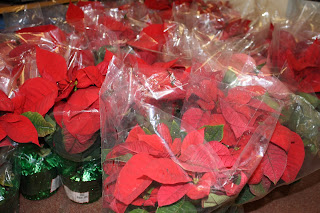
The Aztecs cultivated the poinsettia in Mexico long before Europeans came to the Western Hemisphere.  They used the bracts for a reddish-purple dye and the latex to counteract fever.  The plant also played a part in midwinter celebrations and was widely planted in gardens.             In 1925, Joel R. Poinsett, a botanist and the first U.S. Ambassador to Mexico, sent some plants to his home in South Carolina.  He shared his find with other plant enthusiasts.  December 12 th is National Poinsettia Day and recognizes Poinsett’s contribution to the holiday season.             Poinsettias do well in the home and keep their color until mid-March.  The showy red, pink, white, yellow, bicolored or speckled modified “leaves” are called bracts.  With proper light and temperature, they accumulate the pigments that give them their color.  The flowers of ...

How to contain plant-eating varmints and hail on deck planters by Ed Powers

Image
We have lived in our house in Evergreen for the past 7 years.  And for the past 6&1/2 years we have battled plant-eating varmints and hail on our deck planters.  We started with pots that had wire cages that we built.  Well, the varmints managed to get thru the cage and destroyed our plants.  We then bought hangers and hanging planter bags and put wire cages around them.  Again, both the varmints and hail got the plants.  Half way through this summer we decided to put pots that sat on the deck railing and put plastic sheet plastic on each side of the planters on the railing. It partially worked: we stopped the varmints from getting in. At the same time we set up a night-vision game camera to find out who the culprits were.  No luck, we were only able to get a picture of a tail. Not only could we not discover what the varmints were, but the hail again destroyed our flowers. Out of desperation, we designed and built a modified mini greenhouse type en...

Ideas from the Garden Center by Sandy Hollingsworth

Image
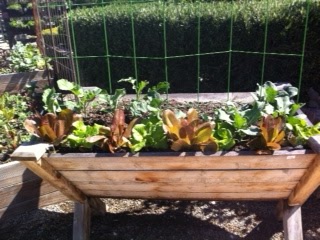
Gardeners are notorious for getting ideas and finding new ways to use space in their garden by visiting garden stores and nurseries. After the fall cold snap when our gardens succumb and we find ourselves sad about the abrupt end to the season, we just can’t stop thinking about gardening.  While you may know that raised beds are a great way to use space and reach your veggies as they grow, you may like to see some ideas to ponder for next season. A rectangle (pictured) is the most common shape for a raised bed and it is generally recommended that it be 3-4 feet wide and about 6-8 feet long so that you can reach if from each end. Shorter is just fine and having two or more is often desired depending on how much produce and variety that you want to grow.  Three tips in the mountains for new raised beds are to line the bottom with hardware cloth to deter critters from digging from below, adding row covers to warm the soil for seeds and keep insects and critters, including birds, ...

Landscaping with Colorado Native Plants Conference --Save the Date!

Image
Landscaping with Colorado Native Plants Conference --Save the Date! February 10, 2018 at the Denver Botanic Gardens Registration for the 3rd Annual LWCNP Conference coming December of 2017: landscapingwithcoloradonativeplants.wordpress.com . Our keynote speaker will be Panayoti Kelaidis.   Topics for the ‘New to natives’ breakout session will include planting for habitat, planting for year-round interest, adding natives to an existing landscape (including replacing your lawn), and “plant this, not that”.  Topics for the ‘Knows the natives’ breakout sessions will include maintenance,  rock/crevice gardening (including bare-root planting), soils for native plants, and water conservation through passive water harvesting.  We will end the day with panel with a grower’s perspective on natives. We will also have many wonderful vendors to check out before and after the conference, and during breaks. The Landscaping with Colorado Native Plants Conference promotes the in...

Mountain Gardening Tips and Tricks

Image
This week on Salida Yard & Garden, a meeting of the minds: guest Gilpin County Extension Director Irene Shonle and host Chaffee County Extension Director Kurt Jones share their "Mountain Gardening Tips and Tricks." Also in this episode, an unintentional poem from Irene: "There is no use In shooing off a moose." http://www.khen.org/salida-yard-and-garden

PANDUAN DALAM MEMULAI PETERNAKAN BURUNG PERKUTUT

Image
Suara burung perkutut memang terdengar hampir mirip dengan burung puter dan juga burung derduku. Memiliki suara yang bagus dan khas menjadikan burung perkutu begitu digemari masyarakat para pecinta burung, maka tak heran jika harga burung perkutut cukup tinggi di pasaran. Hal inilah yang menjadikan burung ini cukup potensial untuk dibudidayakan. Bagi anda yang gemar memelihara burung kicauan, maka tidak ada salahnya jika anda mengembangkan hobi anda tersebut untuk dijadikan sebagai peluang bisnis, karena bisnis budidaya atau ternak burung perkutut saat ini cukup menjanjikan. Pada dasarnya, langkah-langkah beternak burung perkutut hampir sama dengan beternak burung-burung lainnya. Di dalam usaha ternak burung perkutut juga dibutuhkan pemahaman dan keuletan dan juga kesabaran dalam menjalaninya. Bagi anda yang tertarik ingin mencoba untuk beternak burung perkutut, kami telah siapkan informasi mengenai panduan lengkap cara ternak burung perkutut untuk pemula dibawah berikut ini. Cara Ter...

Composting yard waste

Image
Kurt M. Jones Chaffee County Extension Director                As our gardening season comes to an end, rather than throwing away plant waste, many gardeners will compost those materials and help to improve their soils for future years.                Composting is an accelerated way to reduce the volume of organic wastes and return them to the soil to benefit growing plants.   Organic matter improves the drainage and aeration of clay soil.   Compost can be thought of as a separator that “shoulders apart” tightly packed clay particles to allow air and water to enter.   Compost also helps sandy soil hold water and nutrients.   Compost holds moisture like a sponge and releases nutrients slowly into plants as needed.   It also increases the activity of earthworms and other natural soil organisms that are beneficial to plan...